INVASIVE STUCCO
TESTING
Stucco looks solid from the outside. But Houston's rain and humidity can drive moisture behind the surface, causing hidden rot, structural damage, and mold — completely invisible until it's opened up. Don't buy a stucco home without an invasive test.
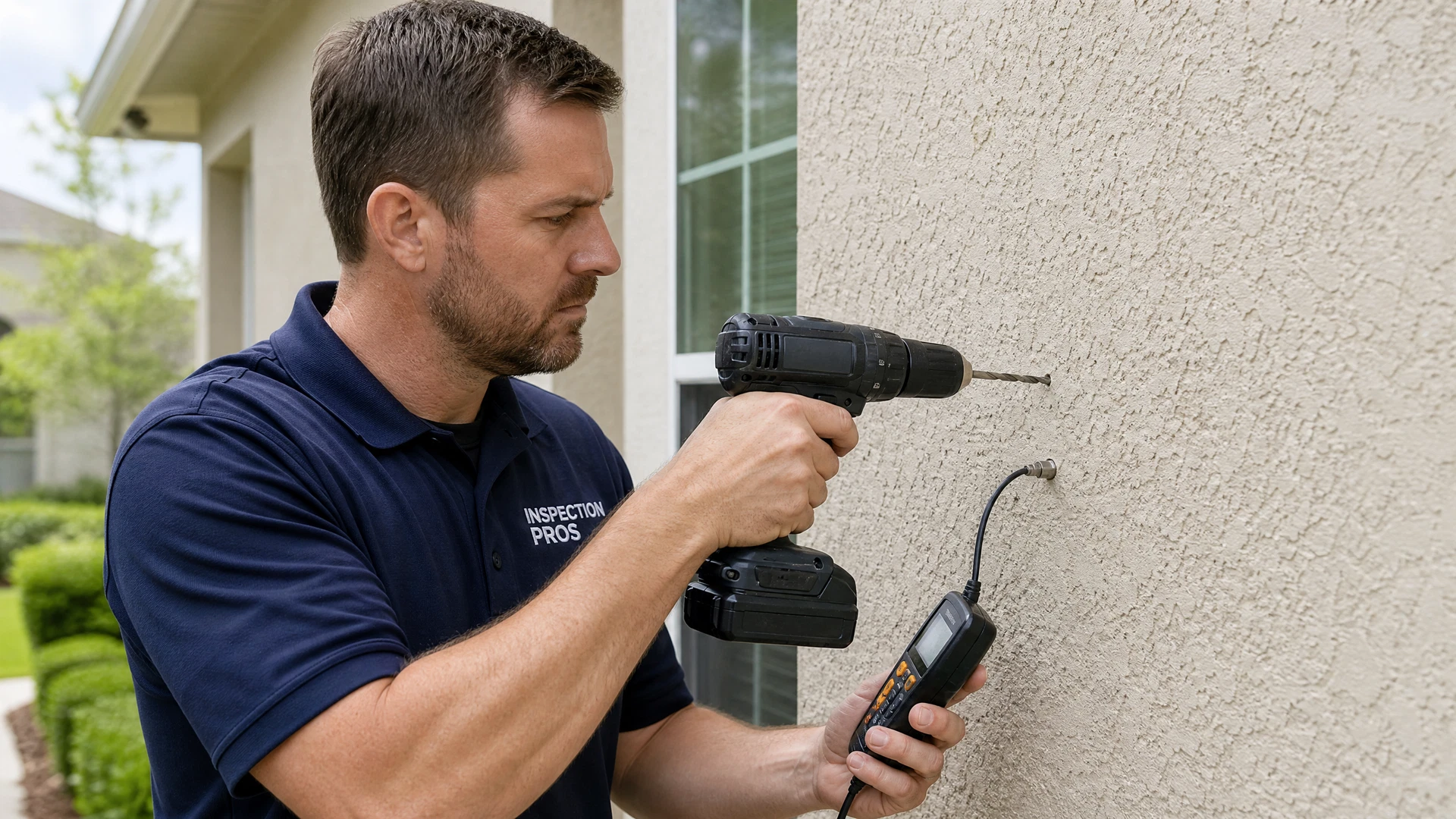
SMALL HOLES.
BIG ANSWERS.
Probe testing is straightforward: two small holes are drilled at each suspect location — typically near windows, doors, and at the base of walls where water tends to collect. A calibrated hammer probe is inserted to measure moisture content and test the firmness of the substrate behind the stucco.
Elevated moisture readings or soft, spongy substrate indicate that water has been present long enough to begin breaking down the wood framing — damage that is completely invisible from the surface.
HIDDEN DAMAGE.
VISIBLE ONLY WHEN OPENED.
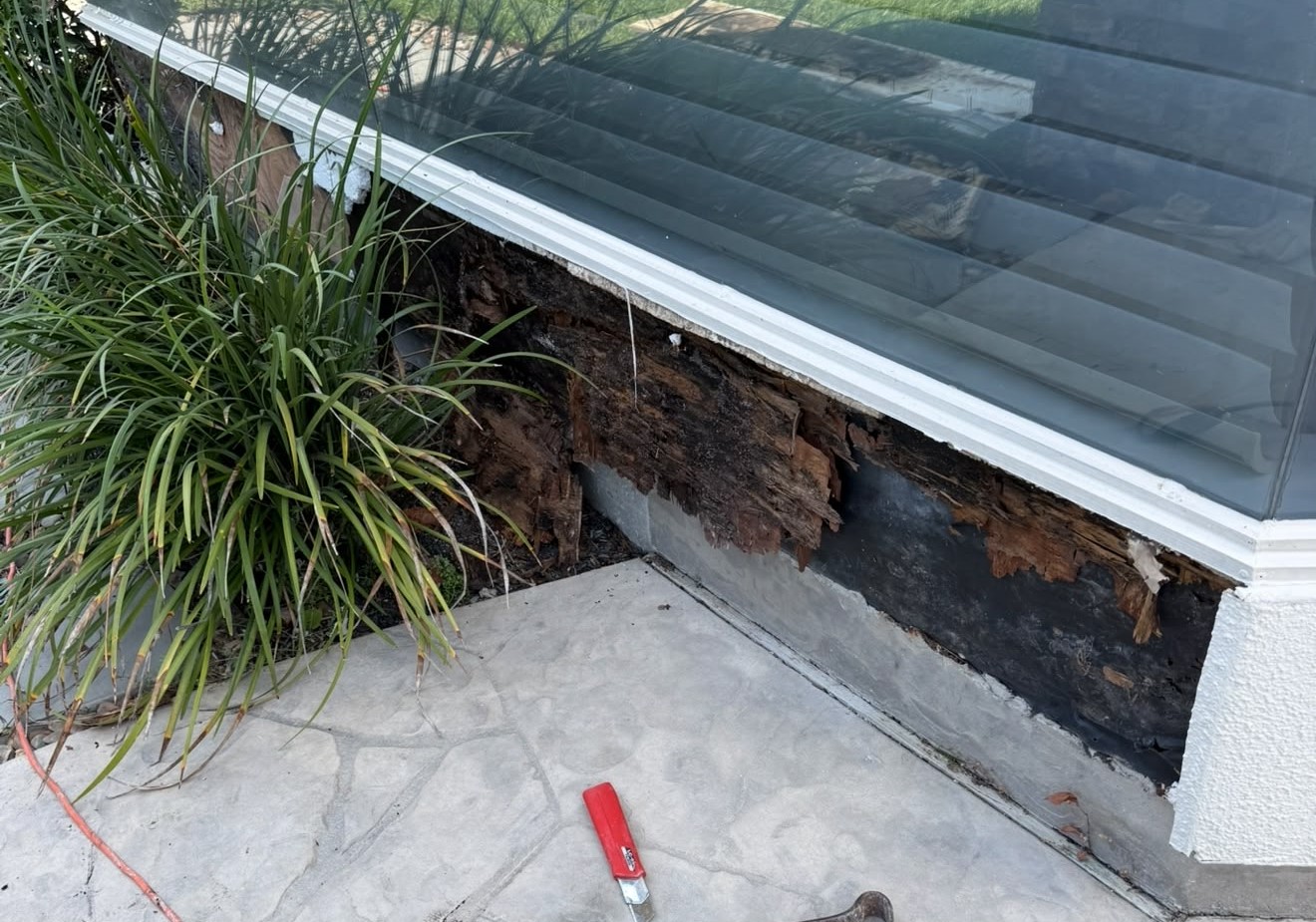
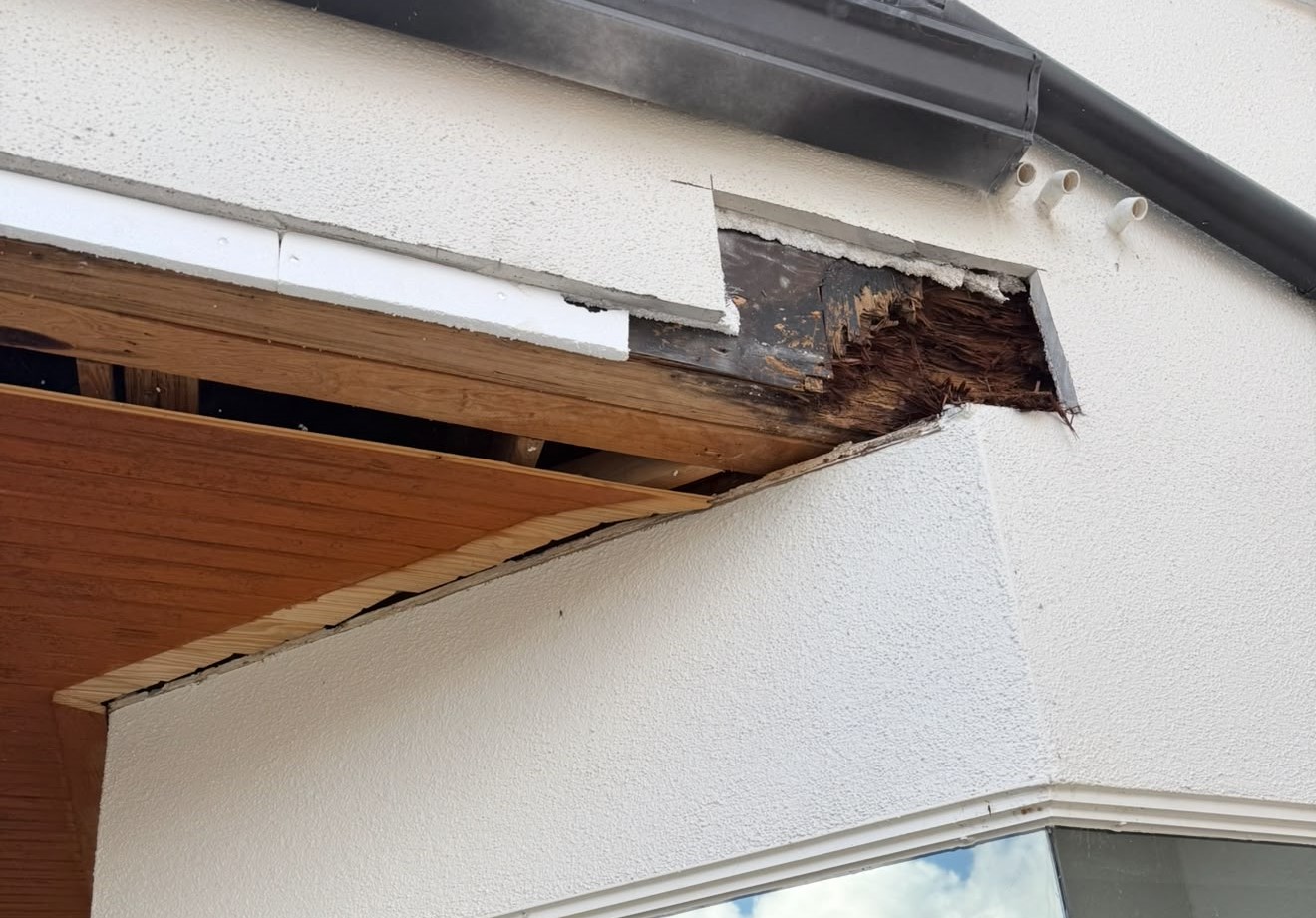
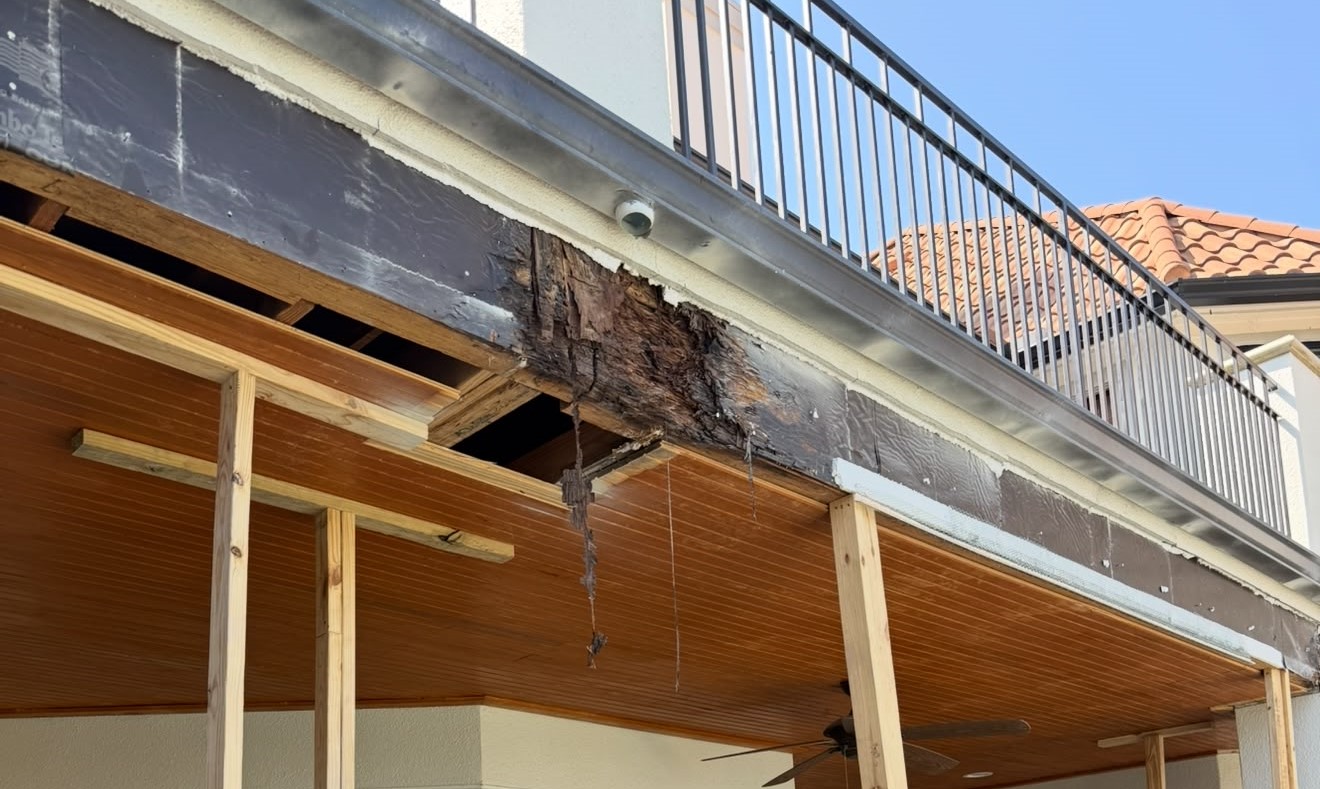
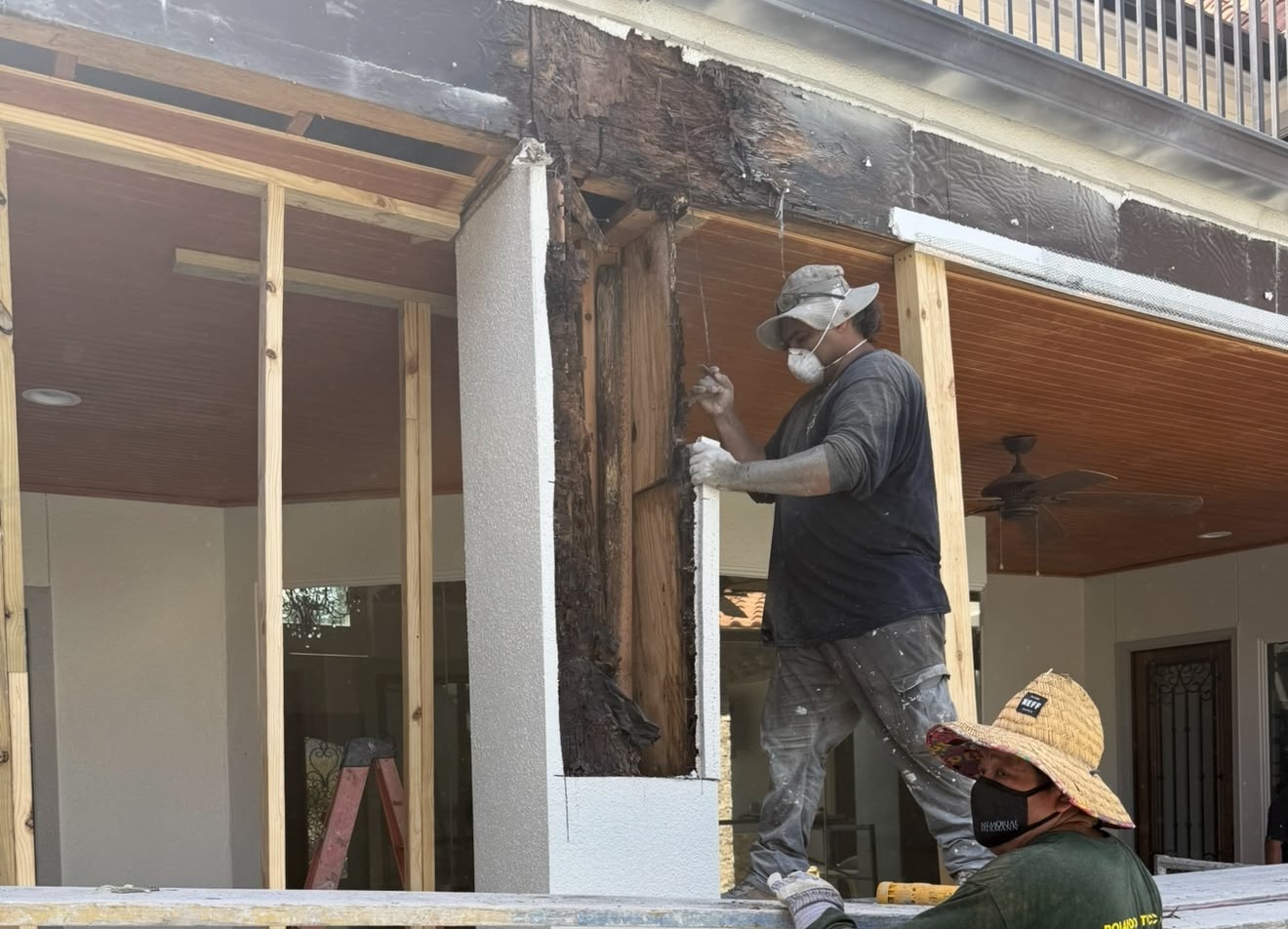
Stucco is an excellent concealer. A home can have significant rot in the wall framing, mold growth on the sheathing, and a failed weather-resistant barrier — while the exterior looks completely intact. By the time visible staining or cracking appears, the damage behind the wall is often already severe.
We have documented cases where probe testing on a visually clean stucco home revealed moisture levels high enough to indicate active rot — findings that led to significant price reductions or the buyer walking away entirely.
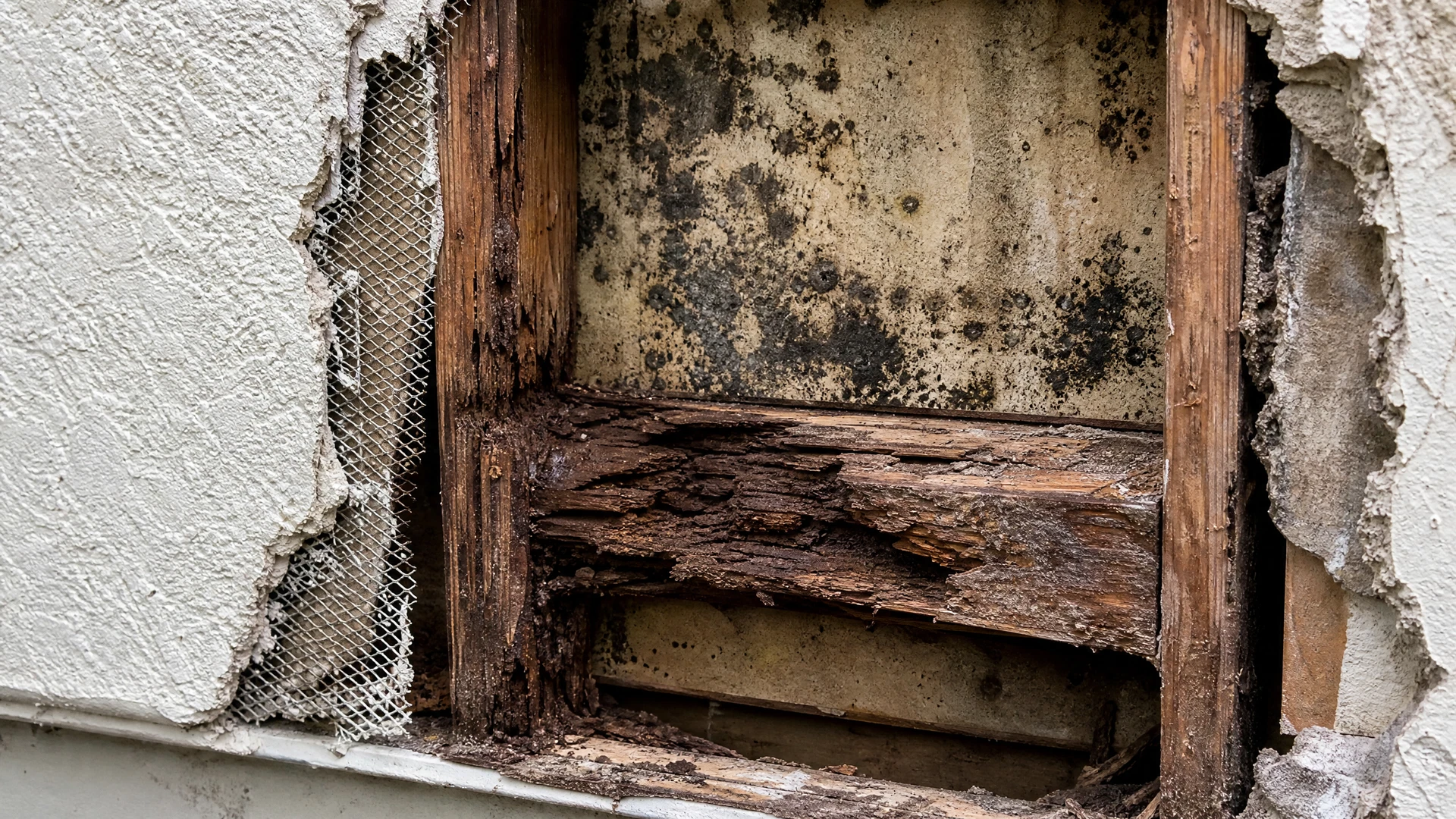
WARNING SIGNS ON
STUCCO HOMES
These visible signs suggest moisture may already be behind the stucco — but the absence of these signs does not mean the home is problem-free.
Staining or Discoloration
Brown or dark staining around windows, doors, or at the base of stucco walls is a classic sign of moisture intrusion behind the surface.
Cracks in the Stucco
Hairline cracks are normal, but diagonal cracks at corners, stair-step patterns, or cracks wider than 1/16" can allow water entry.
Soft or Hollow Areas
Tapping the stucco surface and hearing a hollow sound indicates the stucco has separated from the substrate — a sign of moisture damage underneath.
Efflorescence
White chalky mineral deposits on the stucco surface indicate water has been moving through the wall. Less commonly seen in Houston than other regions, but when present it is a reliable indicator of moisture intrusion.
HARD-COAT STUCCO
VS. EIFS
Both types require invasive probe testing. Here's what makes them different.
Traditional Hard-Coat Stucco
A cement-based, three-coat system applied over metal lath attached to the wall framing. Hard-coat is rigid and durable — the most common stucco type found on Houston homes.
- Cement-based, 3-coat system
- Applied over metal lath
- Rigid and durable when properly installed
- Most common stucco type in Houston
- Moisture intrusion typically occurs at penetrations (windows, doors, hose bibs)
- Probe testing is the only reliable way to evaluate
EIFS (Synthetic Stucco)
EIFS (Exterior Insulation and Finish System) uses a foam insulation board base with a thin polymer finish coat. Less common in Houston than hard-coat, but historically problematic.
- Foam insulation board with polymer finish coat
- Less common in Houston than hard-coat
- Early versions lacked a drainage plane
- Trapped moisture had nowhere to escape
- Can look identical to hard-coat from the street
- Particularly high-risk — probe testing is essential
OUR TESTING PROCESS
Visual Assessment
We begin with a thorough visual inspection of all stucco surfaces — noting cracks, staining, installation deficiencies, missing or inadequate flashing details at windows, doors, and penetrations, and any other areas of concern that warrant probe testing.
Moisture Probe Testing
Two small holes are drilled into the stucco at suspect locations. A hammer probe is then inserted to test the substrate for moisture content and firmness — giving a direct reading of what's behind the surface.
Findings & Recommendations
If probe testing reveals elevated moisture or soft substrate, the report will recommend core sampling by a qualified contractor to determine the full extent of damage behind the wall.
Detailed Report
You receive a written report with photographs of all findings, probe moisture readings, and specific recommendations — including whether further core sampling or repairs are warranted.
SEE WHAT THE
ASSESSMENT INCLUDES.
Review a sanitized sample of our stucco assessment reporting, including documented findings, photographs, moisture readings, and recommendations.
HIDDEN DAMAGE
THE EXTERIOR CAN CONCEAL.
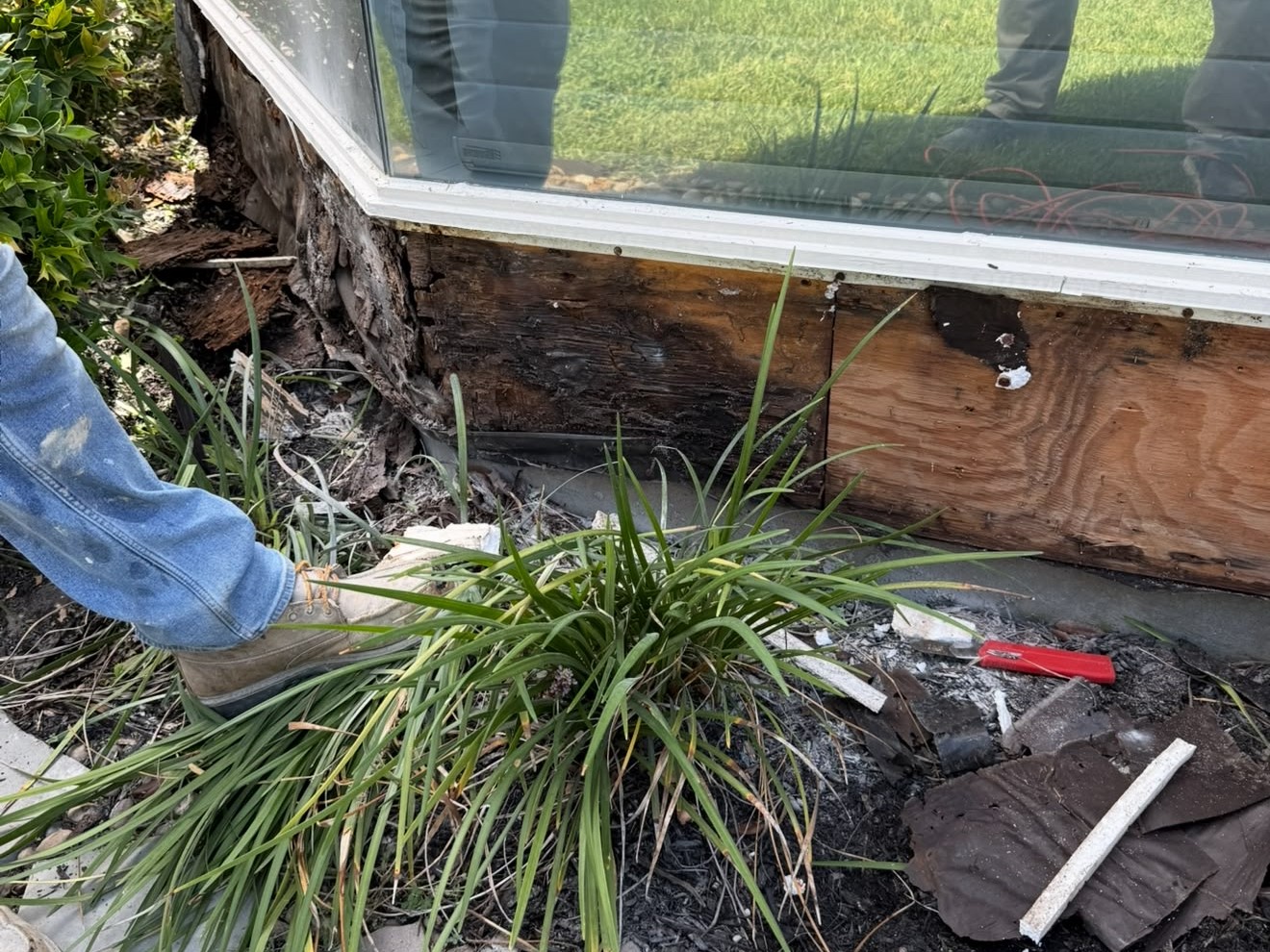
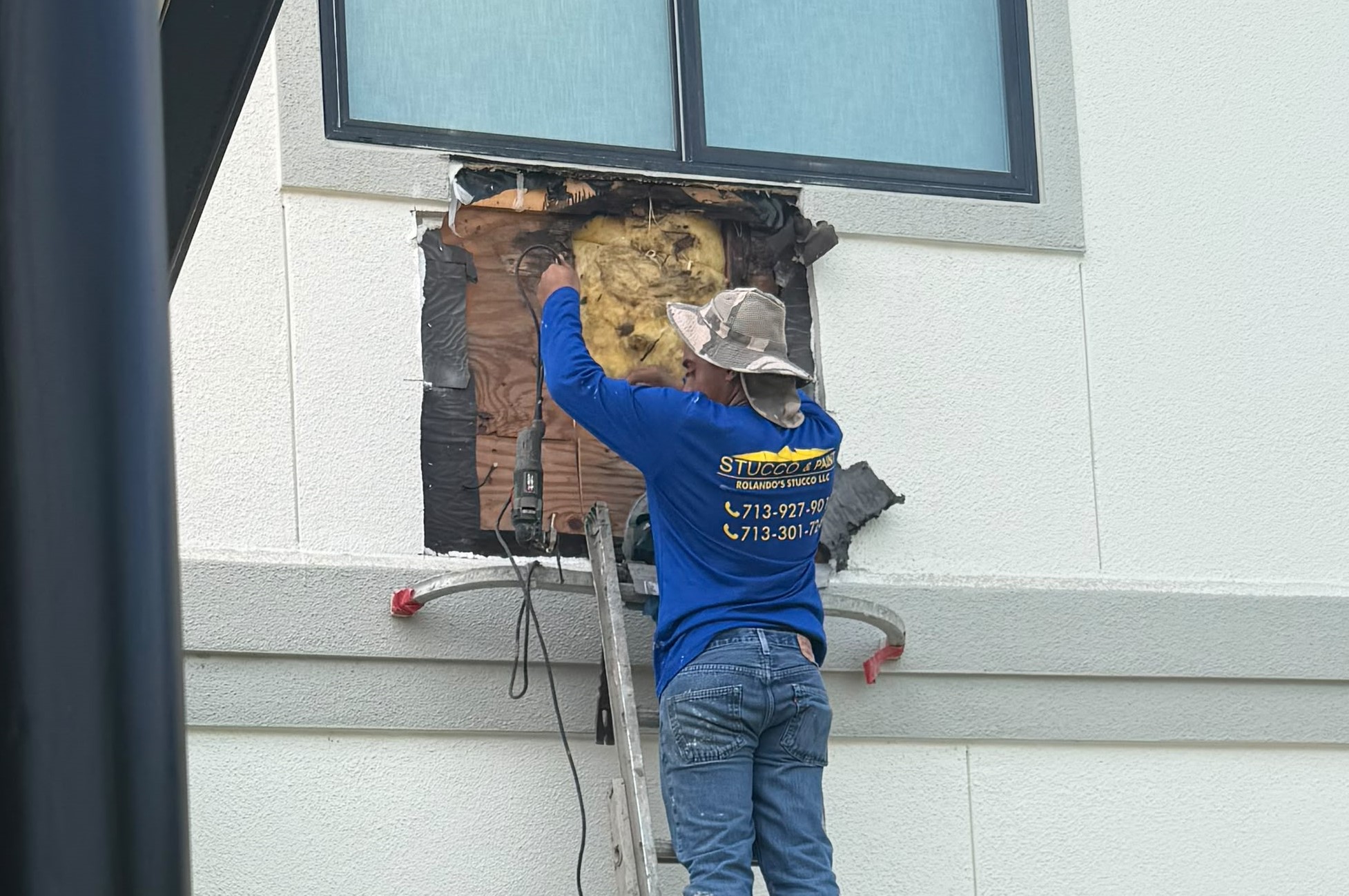
These real post-opening photographs show hidden damage that could not be confirmed from the exterior surface alone. After the inspection, a stucco contractor selectively opened the wall areas identified in the stucco report to evaluate the conditions behind the finish. Inspection Pros does not perform demolition, core sampling, or repair work, and does not recommend specific contractors for that work. We document conditions independently so our findings remain neutral and unbiased.
"In 25 years of inspecting Houston homes, stucco moisture damage is one of the most expensive surprises a buyer can face. We have seen six-figure repair bills on homes that looked perfect from the street. If you're buying a stucco home, an invasive probe test is not optional — it's essential."
— Robb Hill, Owner & Founder, Inspection Pros
STUCCO TESTING FAQ
BUYING A STUCCO HOME?
Don't close without an invasive probe test. Schedule today or call to discuss your property.