MOLD INSPECTION
& IAQ TESTING
Houston's climate is one of the most mold-prone in the country. Our TDLR-licensed Mold Assessment Consultant performs thorough air quality testing and written assessments — the only legally compliant way to evaluate mold in Texas.
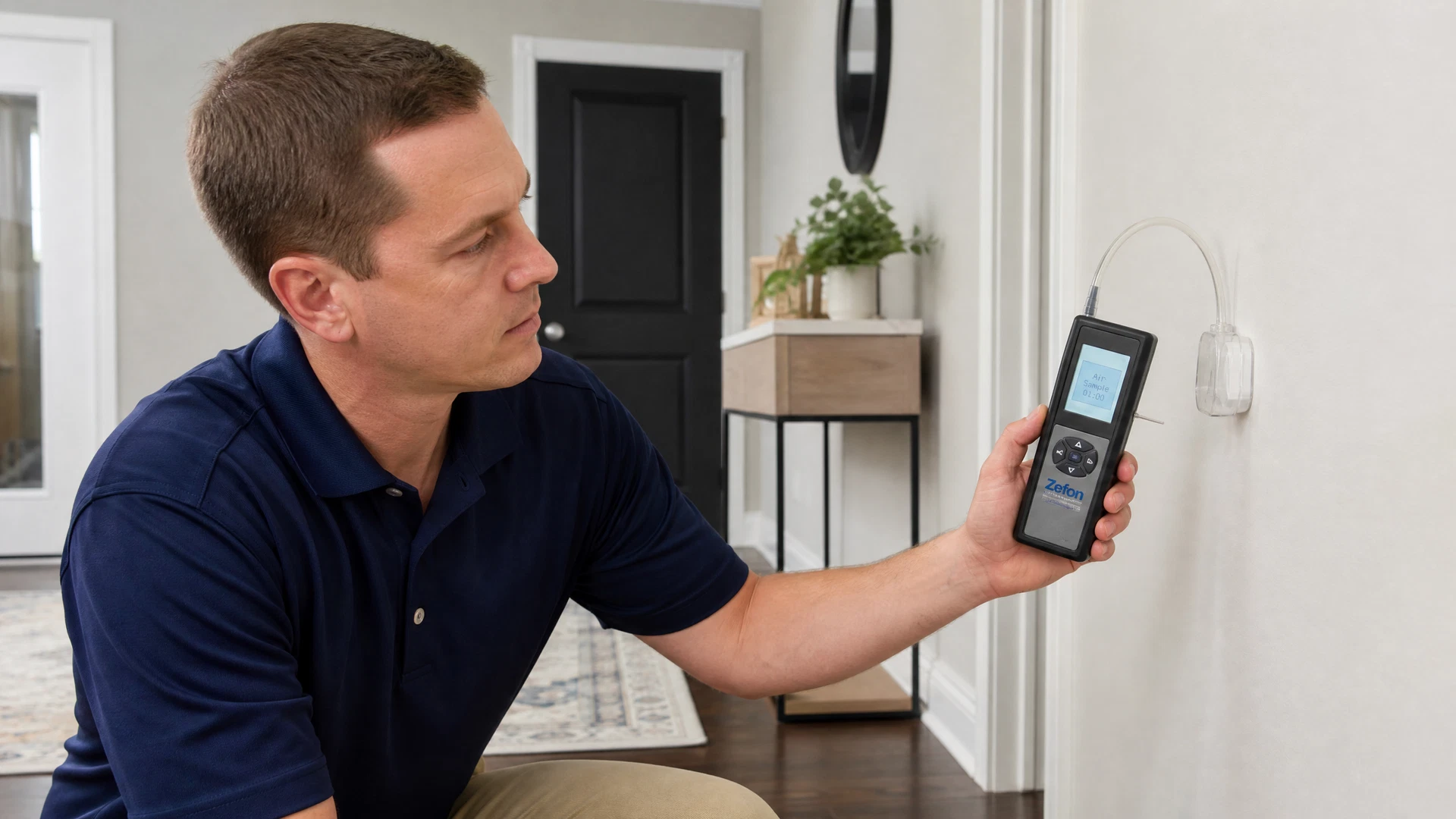
AIR SAMPLING.
LAB-VERIFIED RESULTS.
Air quality testing uses spore trap cassettes to collect a measured volume of air from inside the home. These samples are sent to an accredited third-party laboratory that identifies and counts mold spore types under a microscope.
An outdoor baseline sample is always collected at the same time. Elevated indoor spore counts — particularly of water-damage indicator species — confirm an active mold source inside the home, even when nothing is visible.
MOST MOLD IS
NEVER VISIBLE.
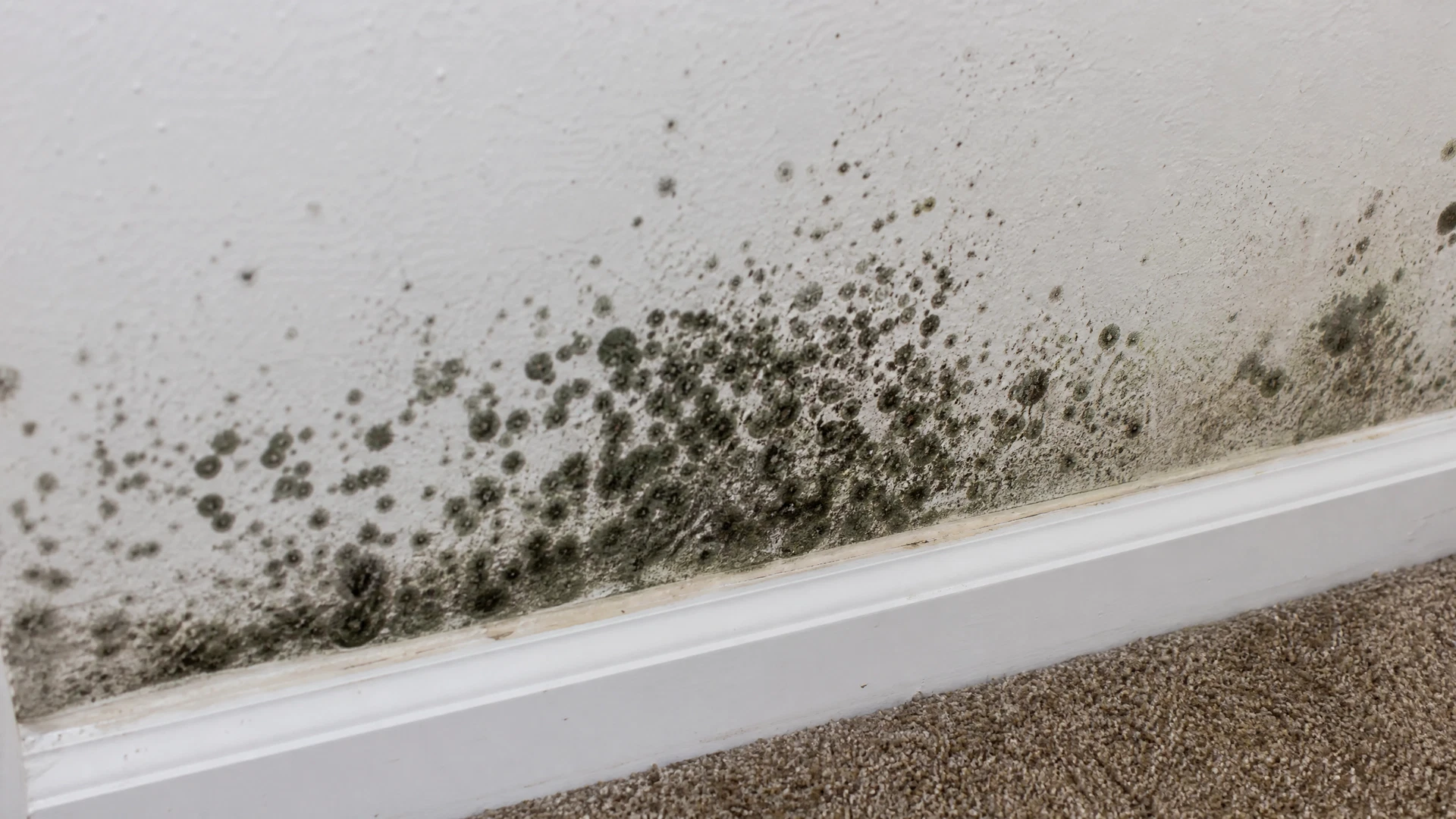
Visible mold growth on walls or ceilings is actually the exception. The majority of mold problems in Houston homes occur inside wall cavities, under flooring, in attic sheathing, and inside HVAC systems — completely out of sight.
This is why air sampling is essential. Elevated spore counts in the air tell the story even when the walls look clean. A musty smell with no visible growth is one of the most common presentations we encounter.
Why Houston Homes Are
High-Risk for Mold
Houston consistently ranks among the most mold-prone cities in the United States. Here's why.
Year-Round Humidity
Houston's subtropical climate means humidity rarely drops below 60%. Mold only needs 24–48 hours of sustained moisture to begin colonizing surfaces.
Hurricane & Flood History
Post-flood homes are at extreme risk. Mold can grow inside walls and under flooring with no visible signs for weeks after water intrusion — even after a home appears dry.
HVAC Systems
Air conditioning systems that run constantly can develop mold in drain pans, coils, and ductwork — spreading spores throughout the entire home every time the system runs.
Freeze Events & Pipe Failures
Houston homes aren't built for freezing temperatures. When hard freezes hit, pipes that lack proper insulation burst inside walls and attics — often going undetected for days and creating ideal mold conditions.
WHEN TO GET
MOLD TESTING
Buying a Home
Before closing — especially on older homes, homes with previous flooding, or any property with a musty smell. Mold discovered after closing becomes your problem.
After Any Water Intrusion
Roof leak, plumbing failure, flooding, or HVAC condensate overflow. Even if the area appears dry, mold can be growing inside walls within 48 hours.
Musty or Earthy Smell
A persistent musty odor is one of the most reliable indicators of active mold growth — even when nothing is visible. Don't ignore it.
Unexplained Health Symptoms
Respiratory irritation, chronic congestion, or allergy-like symptoms that improve when you leave the home can indicate elevated mold spore counts indoors.
HVAC Concerns
Visible growth on vents, musty air when the system runs, or a system that hasn't been serviced in years. HVAC mold spreads through the entire home.
Real Estate Transactions
Sellers, buyers, and realtors all benefit from a documented mold assessment. It protects all parties and satisfies lender and insurance requirements.
WHAT'S INCLUDED IN
YOUR ASSESSMENT
Our mold assessment goes beyond a visual check. We use air sampling, surface sampling, and thermal imaging to build a complete picture of your home's indoor air quality.
SCHEDULE YOUR ASSESSMENT- Air quality sampling using spore trap cassettes
- Surface sampling where visible growth is present
- Moisture meter readings in suspect areas
- Thermal imaging to locate hidden moisture sources
- HVAC system visual assessment
- Attic and crawl space evaluation
- Lab analysis by accredited third-party laboratory
- Written assessment report with findings and recommendations
THE ASSESSMENT PROCESS
On-Site Assessment
We walk the entire property — interior, attic, and any accessible crawl spaces — documenting moisture readings, visible growth, and areas of concern.
Air & Surface Sampling
Spore trap cassettes collect air samples from inside the home and outdoors for comparison. Surface samples are collected where visible growth is present.
Lab Analysis
Samples are sent to an accredited third-party laboratory. Results are typically returned within 24–48 hours and identify mold types and spore concentrations.
Written Report
You receive a TDLR-compliant written assessment report with lab results, findings, photographs, and specific recommendations for remediation if warranted.
Texas Mold Assessment Law
Under Texas Occupations Code Chapter 1958, anyone who performs a mold assessment for compensation must hold a license issued by the Texas Department of Licensing and Regulation (TDLR). Unlicensed mold assessments are not legally valid and cannot be used in real estate transactions or insurance claims.
Robb Hill holds TDLR Mold Assessment Consultant License #1723. You can verify this license at tdlr.texas.gov.
Sample Mold Assessment Report
Review the clear findings, laboratory results, photographs, and recommendations included in a professional mold assessment report.
Download Sample Report (PDF)MOLD INSPECTION FAQ
READY TO TEST YOUR HOME'S AIR QUALITY?
Schedule online or call us. Same-week appointments available.